
 Русский
 tatar

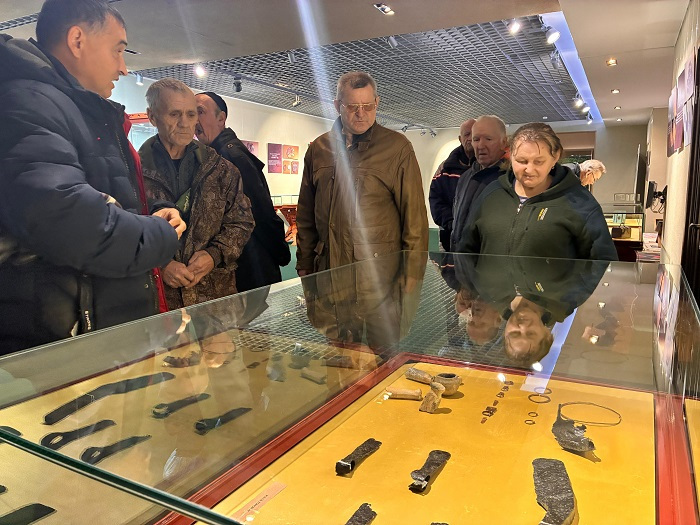
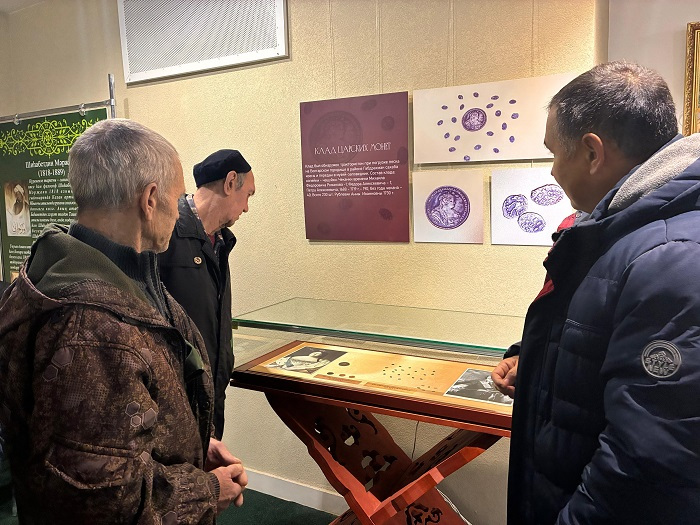
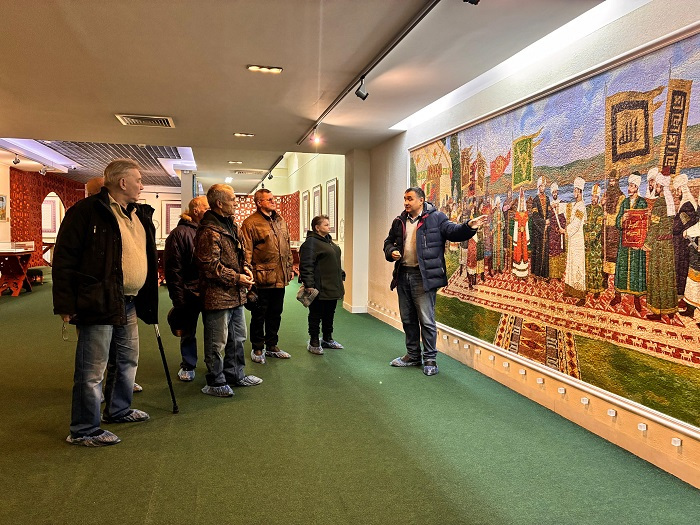
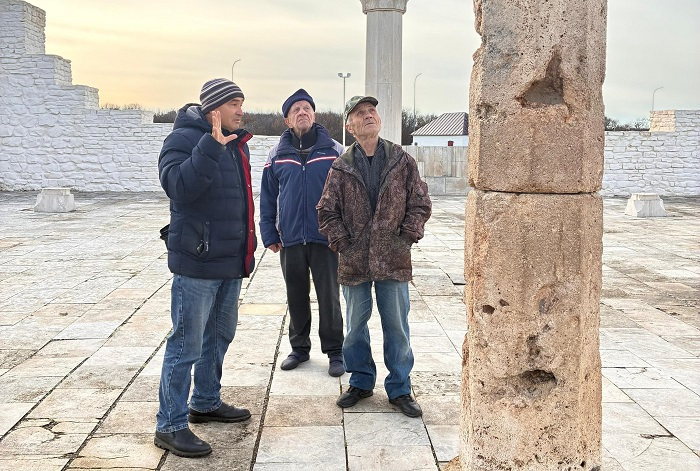
On November 24, 2025, a research associate I. D. Muhametshin gave a lecture “Bolshetarkhansky burial ground” to the guests of the Bolgar Museum-Reserve. The audience learned about the initial stage of settlement of the Middle Volga region in VIII-IX centuries. This process lasted from VII to X centuries and contributed to the formation of the Bulgar nation from many tribes and peoples. This can be clearly seen in the study of burial grounds.
The Bolshetarkhansky burial ground was discovered in 1950 by A.H. Khalikov, explored in 1957, 1960 by an expedition of the Kazan branch of the USSR Academy of Sciences and Kazan University under the leadership of V.F. Gening, A.H. Khalikov, in 1970 – by E.A. Khalikova. The monument is located on the right bank of the Volga River near the western outskirts of the village of Bolshie Tarkhany, Tetyushsky district. According to the set of items found in the burial ground, as well as the Sassanid drachma, a coin of the Khorezm type from the time of the Arab conquest; a fragment of the Abbasid dirham of the second half of VIII – first half of IX centuries, it is one of the earliest monuments of the Azov Bulgars in the Middle Volga region. Traces of ritual burials were found in the feet of the buried (horse skulls and limb bones), and pottery was found at the heads. Ceramics are represented by round-bottomed pot-shaped and jug-shaped vessels. The funeral inventory consists of clay spinning wheels, arrowheads, knives, sabers and horse harness accessories, bronze, silver and glass jewelry (bracelets, rings, pendants, buckles, earrings, beads).
With great interest, the audience learned previously unknown information about the history of the Bulgars, their settlement and interaction with the population of the Urals, including the bearers of the Imenkov and Kushnarenkov cultures. The lecture was attended by 9 people.
Share on social networks