
 Русский
 tatar

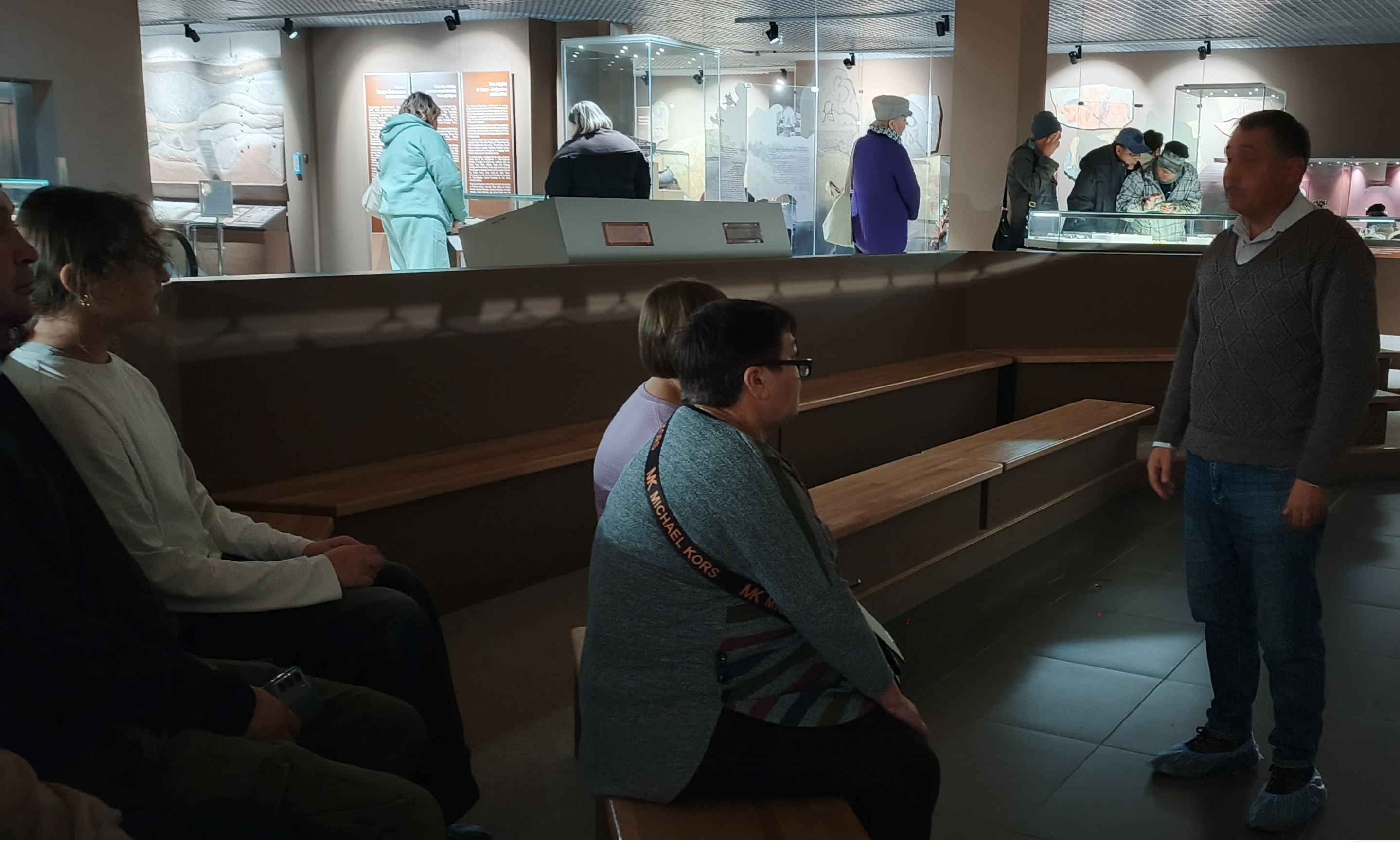
On November 8, 2025, a researcher I.D. Muhametshin gave a lecture on the topic “Zolotarevskoye settlement” to visitors of the Bolgar Museum-Reserve. The audience became acquainted with the history of the ancient Bulgar city located in the upper reaches of the Sura River.
The settlement stood on a steep 15-meter promontory formed by the slopes of a ravine, along the bottom of which the Medoyevka River flowed. In terms of the settlement, it resembled a whelk shell — coils of earthen ramparts studded with stakes, and inside lintels of wooden walls.
From XI to XIII centuries, Burtas, Bulgars and Mordvins lived here. Since XII century, representatives of the Askiz culture from the Yenisei River have appeared at the Zolotarevskoye settlement. The most striking evidence of this is the iron lining of the horse harness, covered with gold. Here, in 1237, a battle took place between the defenders of a medieval town inhabited by the ancestors of the modern peoples of the Volga region, and the Mongol army marching on Russia. The city was destroyed, and its name is unknown.
With great interest, the audience learned about a valuable find – a small golden mask of a horned man. It is difficult to say whom it portrays and whose culture it belongs to, but this mask in a stylized form is now depicted on the coat of arms of the Penza region.
Nine people attended the lecture.

Share on social networks