
 Русский
 tatar
tatar
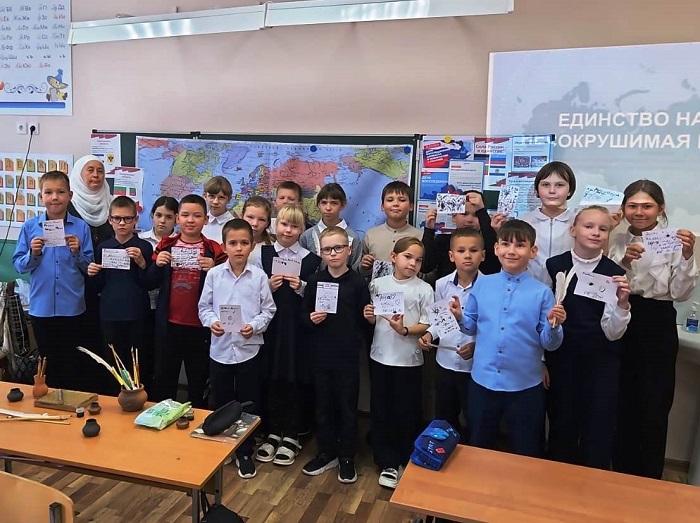
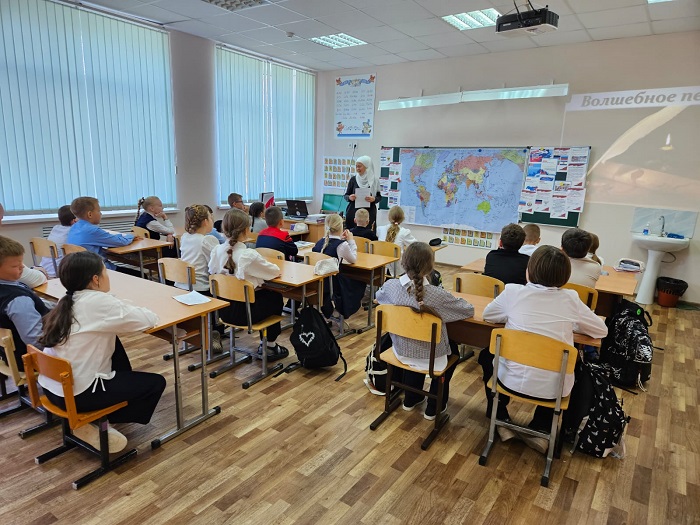
On September 30, an employee of the Bolgar Museum-Reserve Galimullina N. R. held an interactive lecture “The history of the development of writing” for 21 schoolchildren from Bolgar sanatorium boarding school. During the archaeological study of the ancient Bolgar settlement, many inscriptions are found on individual household items, handicrafts and pottery: on spherocones, jugs and spinning wheels. Benevolent sayings made in Arabic script on metal jewelry are also often found: on women’s copper and silver bracelets, rings, mirrors. As you know, the first writing material for the ancestors of modern Tatars-Bulgars was stone. They also wrote on waxed boards and specially treated birch bark, scratching with bone rods resembling the ancient Russian “pisala”. During the heyday of Volga Bulgaria, paper became the main material for writing. Unfortunately, the written manuscripts of the Bulgar period are almost not preserved, only their late lists have come down to us.
During the lecture, a colorful presentation was used to help students learn how writing has developed since the ancient period, when cavemen still painted amazing drawings on cave walls – petroglyphs. These, in turn, eventually transform into pictographs, and later conditional icons are added. Gradually, the icons looked less and less like drawings, and standard symbols appeared, which in some cases already indicated certain sounds. Thus, the first alphabet appears.
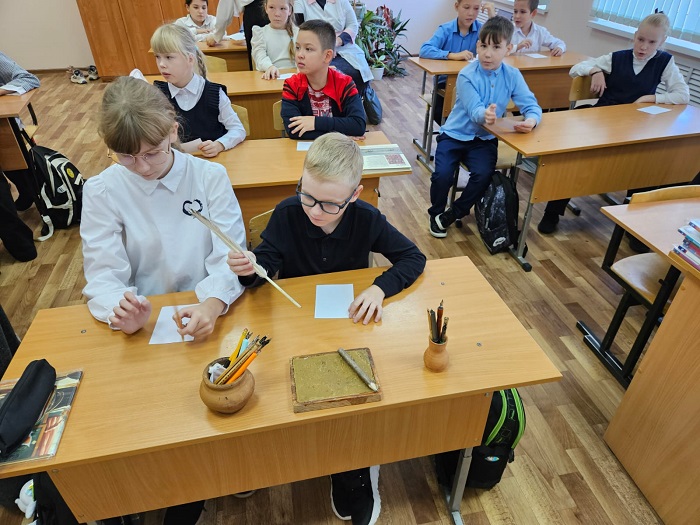
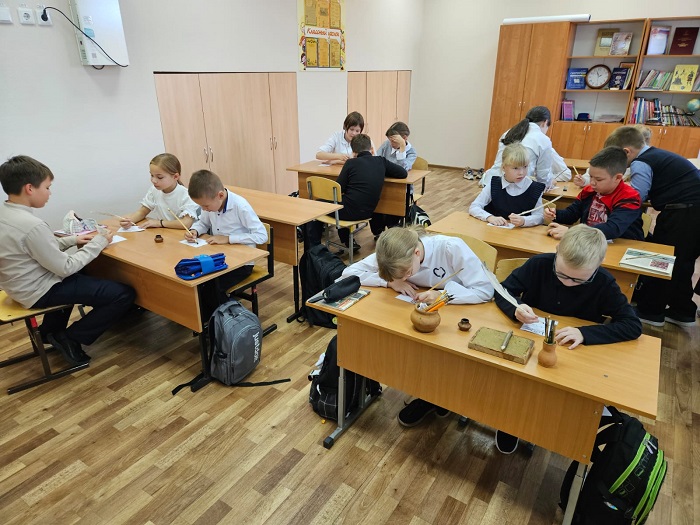
The students also learned how writing supplies have improved. The children enjoyed trying out such writing devices as wax tablets, reed sticks, goose and metal ink pens. The participants were interested in the interactive event, they asked a lot of questions, and also demonstrated their knowledge on the topic.
Share on social networks