
 Русский
 tatar
tatar
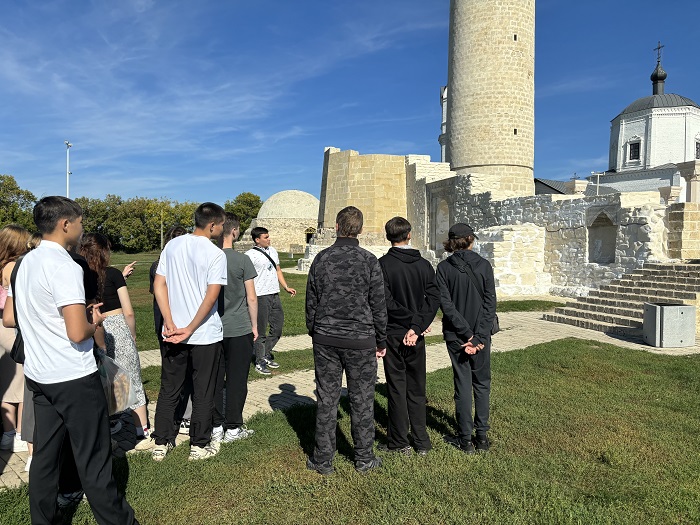
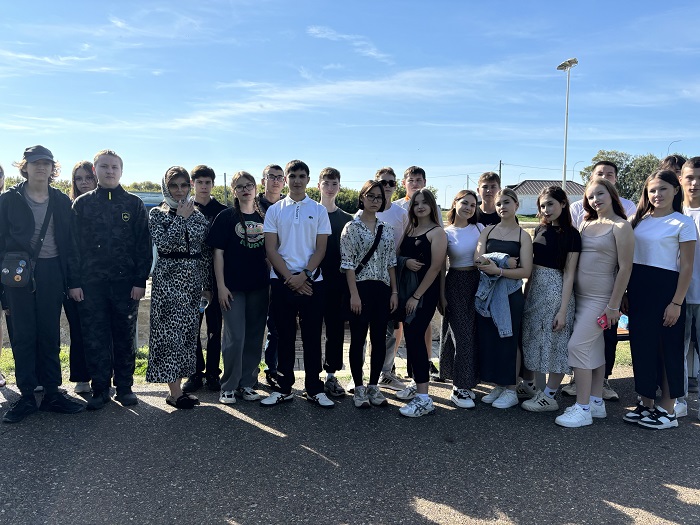
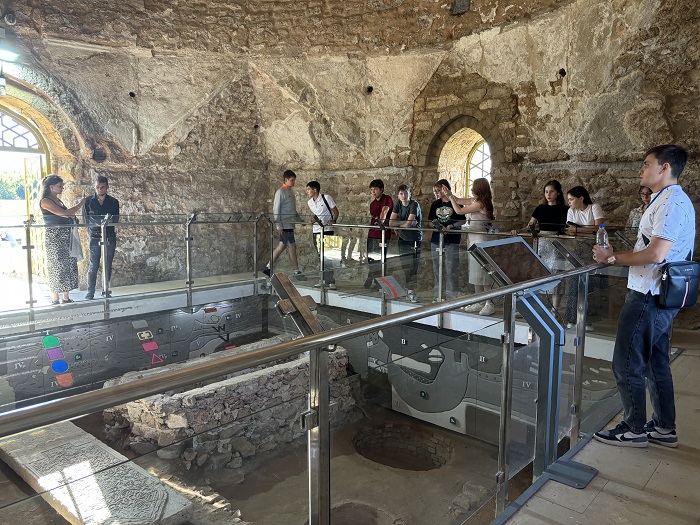
On 12 September 2024, an employee of the Bolgar Museum-Reserve Hramov D.P. held an information and cognitive event on ‘Architecture of Volga Bulgaria’ for 25 tourists from the city of Cheboksary.
If in the history of the Bulgars VIII-IX centuries were a transitional period from nomadic to sedentary way of life, the end of IX – beginning of X centuries were the time of unification of different tribes and creation of the culture of a single centralized state. The formation of the state contributes to significant progress in the development of productive forces. Ideologically, it was the time of the adoption and spread of Islam, which made an imprint on the spiritual life of the Bulgars, on their art and artistic culture. This is the time of the flourishing of the so-called Muslim culture, close communication between the peoples of the Near East, Middle East and Eastern Europe. These communications had a certain levelling influence on the development of architecture and art of Muslim countries, contributing to the commonality of many architectural forms, structural solutions, construction techniques, as well as subjects of art, and even features of style. Throughout its history, Volga Bulgaria was close to Transcaucasia, the Middle East and Central Asia, with which it had close economic relations.
The participants of the event learnt the history of architecture of the ancient city of Bolgar. In an interactive way, they got acquainted with the surviving architectural monuments of the Bolgar settlement of XIII-XIV centuries and learnt many interesting facts.
Share on social networks