
 Русский
 tatar
tatar
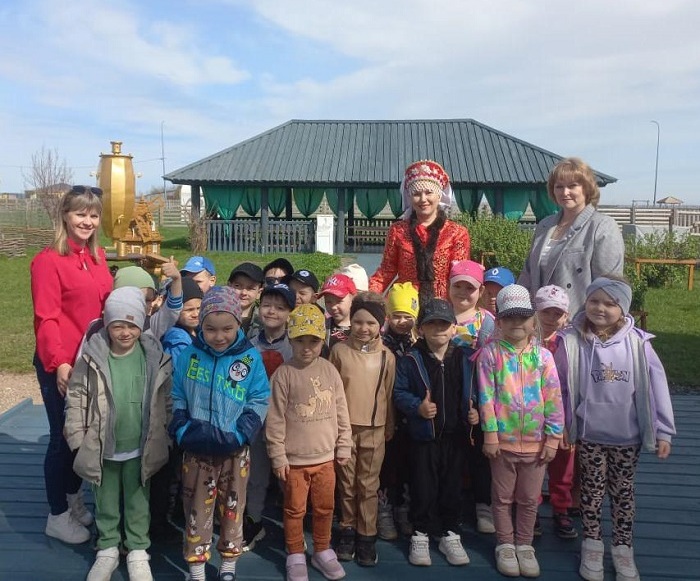
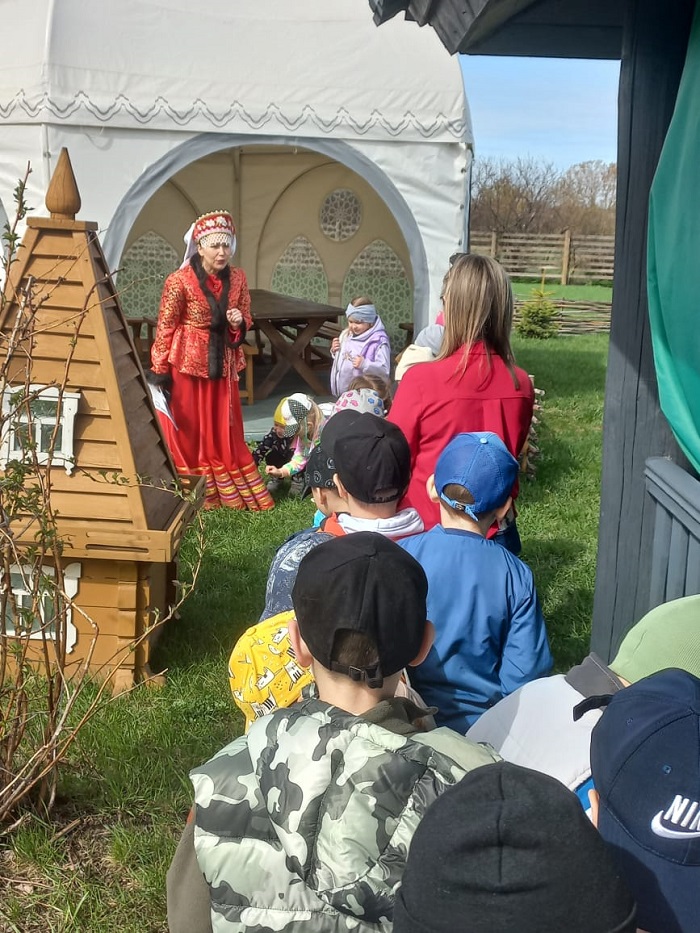
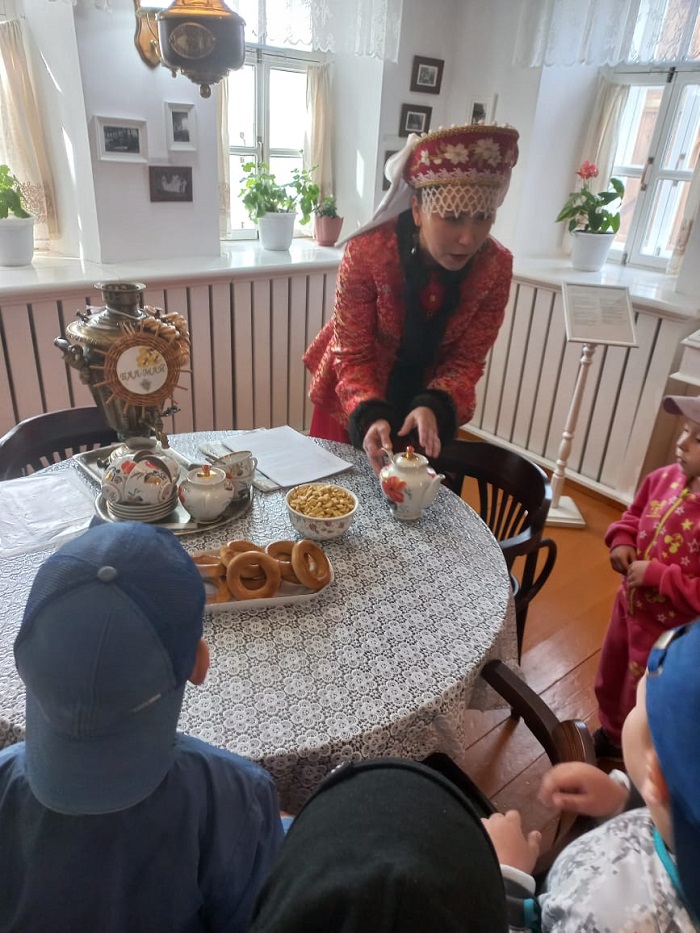
On 25 April 2024, a research assistant of the Bolgar Museum-Reserve Musina G. M. held a museum lesson “Let’s sit at the samovar” for 22 pupils of the kindergarten “Rodnichok”. The purpose of this event was to form ideas about the traditions of Russian tea drinking, to foster love for the native people and respect for their customs and traditions.
The very first Russian samovar was made of copper and appeared in the Urals. The first factory specializing exclusively in the production of samovars was opened in Tula by the armorer Fyodor Lisitsyn in 1778. The samovars of the Lisitsyn dynasty were famous for their variety of types and finishes: barrels, vases with chasing and engraving, egg-shaped samovars, with dolphin-shaped taps, with loop-shaped handles. Each form of samovar had its own name: “egg”, “ball”, “shot glass”, “vase”, “turnip”. As more and more people wished to acquire a fashionable and necessary samovar in everyday life, the production was opened in many cities of Russia. Initially in each city, it was called differently: in Kursk – “samokipets”, in Yaroslavl – “samogar”, and in Vyatka – “samogrey”. The new business turned out to be so profitable that artisans converted workshops into factories. Soon in Russia, the samovar became the main item of tea drinking.
During the event, children learnt about the history of tea, samovar, traditions of Russian tea drinking and hospitality. Kids listened to poems, proverbs and sayings about samovar, solved riddles. The event ended with a round dance, which the children enjoyed very much. Kids received souvenirs and treats in memory of the visit.

Share on social networks