
 Русский
 tatar
tatar
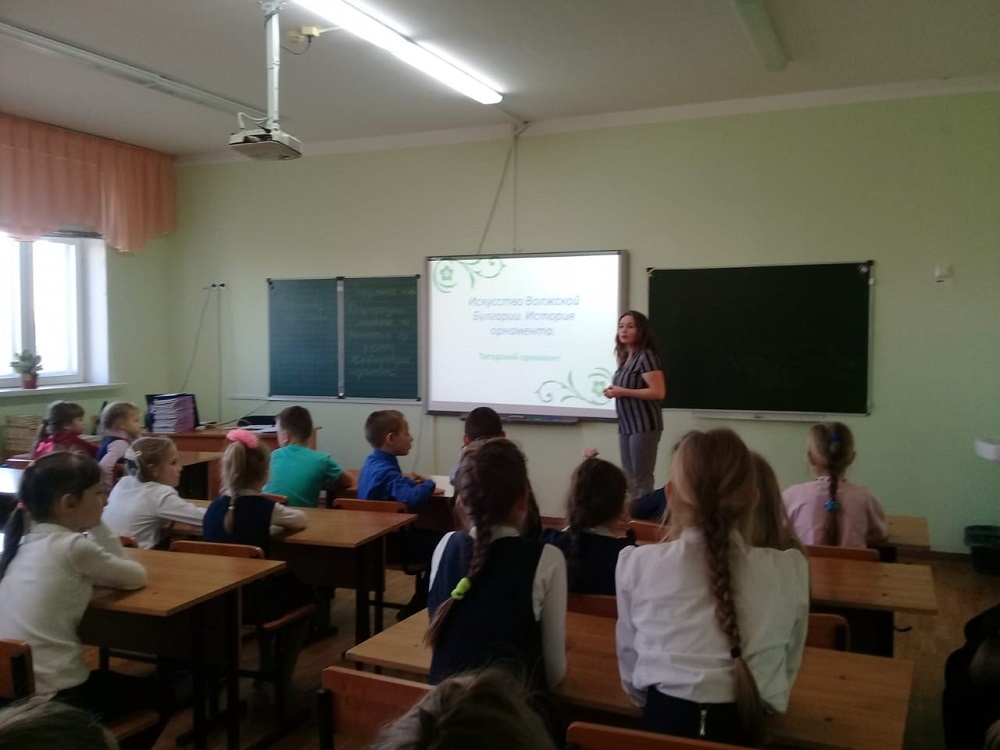
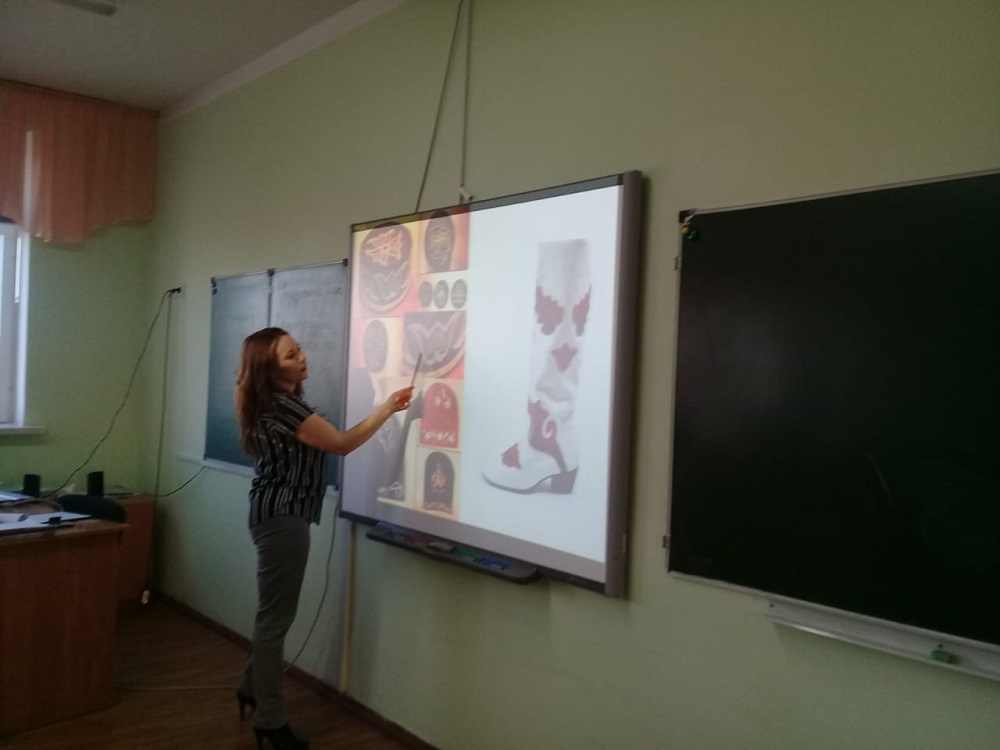
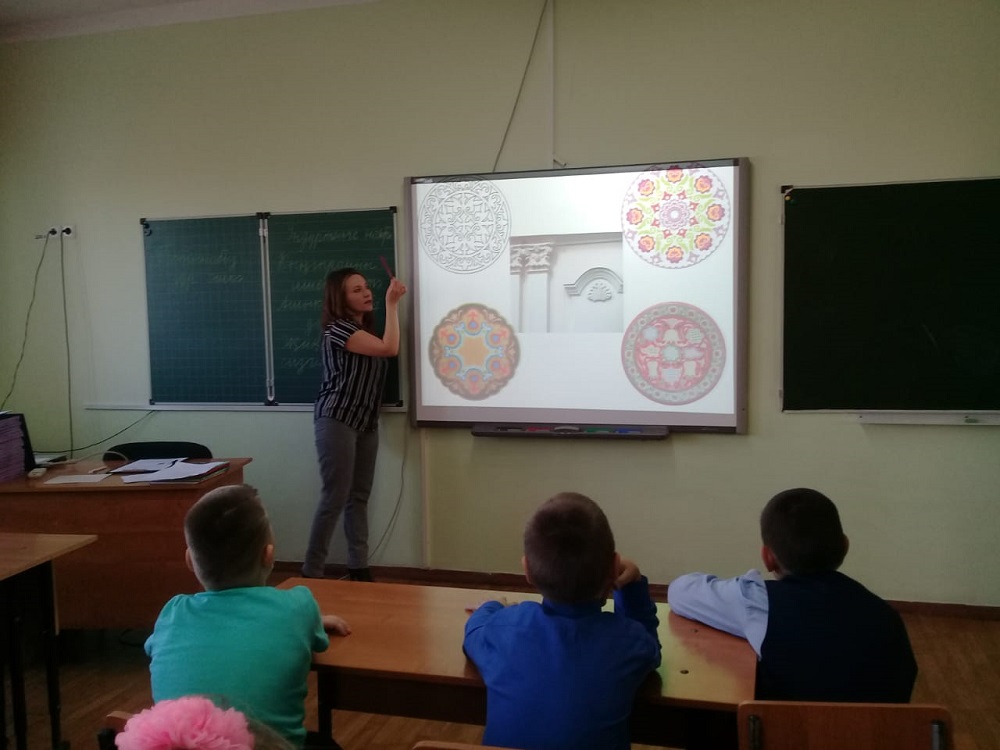
On November 22, 2019 the employee of the Department of organization of excursions of the Bulgarian Museum-reserve Abdrakhmanova A. R. for pupils of the 2nd, 3rd classes of MBOU “Bulgarian secondary school No. 2″ held a lecture on the theme ” Art of Volga Bulgaria. The story of the ornament”.
Ornament is a beautiful storyteller. If you look at him, he will tell you about his land and the time when he was born, about his people and the events that went through with him.
Ornament is a sequential repetition of individual pictorial motifs or their groups. It is a pattern that adorns products and objects of various shapes and sizes – from jewelry to architectural structures.
Tatar national ornament was formed for thousands of years. The ancient ornament, which reflected nature and significant for man objects and images, was rich. Mainly used geometric and floral ornament. The patterns have ancient origins, should be the motif of Lotus, heart-shaped motif to the outlet (socket, rosette – an ornament in the form of petals of a blossoming flower or a few leaves, similar in shape), palmettes (a stylized palm leaf).
In the pre-Mongol period of Volga Bulgaria, stylized images of elk, Fox, marten, Falcon, horse, Swan, duck were popular in the ornament. Often created patterns of motifs of wild flowers: daisies, bells, forget-me-nots, poppies.
In the era of the Golden Horde, the ornament reflects the influence of Mongolian and Chinese arts. There are oblakovidnye motives, the motif of the wattle, in a new interpretation you can see the image of the Lotus. More often there are motifs depicting foreign or fantastic animals-lion, peacock, ROE deer, dragon, Sphinx, two-headed birds.
In the era of the Kazan khanate, Tatar ornamental art was strongly influenced by Turkish and Iranian cultures. The ornament is replenished with motifs from the repertoire of garden flowers-dahlias, asters, poppies, peonies, which were popular in the patterns of imported Oriental fabrics.
Now the Tatar ornament is revived in the works of modern professional artists and folk artists, Amateur artists. The ornament decorates interior items: shamaili, wall plates, decorative ceramics, namazliki, towels, tablecloths, trays, boxes; costume elements (dresses, vests, hats, shoes). It is also important that when creating national patterns, blue, green, red, yellow, blue colors are most often used.
Each nation has its own symbol, which has meaning only for it. Many masters use Tatar ornament, in which the main motif is a Tulip. The Tulip is a symbol of rebirth. It is inextricably linked to the religious views of the Muslim world. The flower is associated with the name of Allah. The spelling of the name of the plant in Arabic consists of the same letters as the name of the God of the Muslim world. The flower crowns the coat of arms of the Republic, confirming the period of its heyday.
During the lecture, students got acquainted with the history of the national ornament, with the most beautiful samples and types of Tatar pattern. Children carefully watched the presentation and video about ornamental art, actively participated in the class, answering questions and expressing their point of view about certain patterns. At the end of the lecture, students were given homework-samples of Tatar ornament, which they should paint, using their knowledge on the topic.
Photo report
Share on social networks